How Long Does a 33 kW Charger Take to Charge an EV?
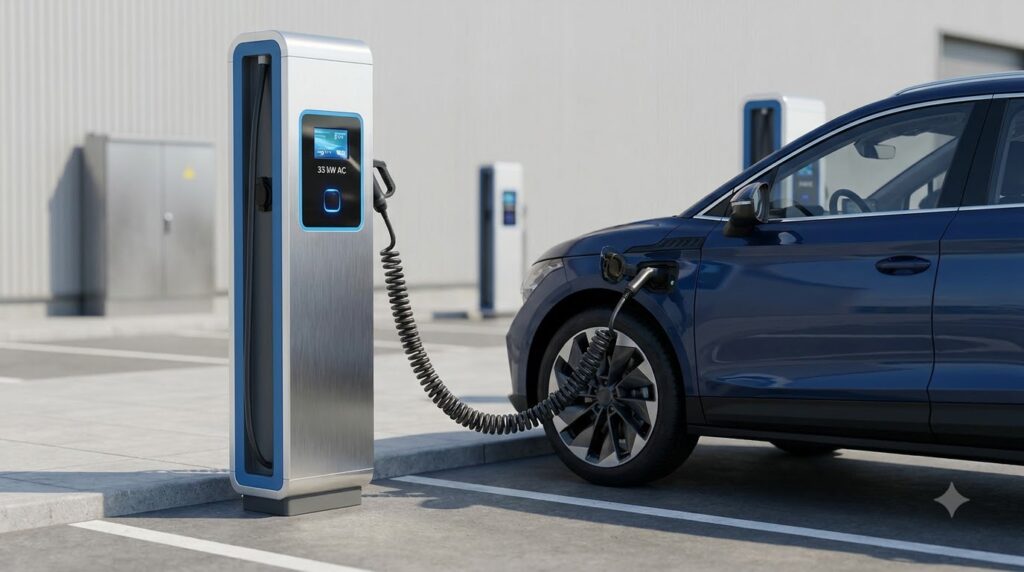
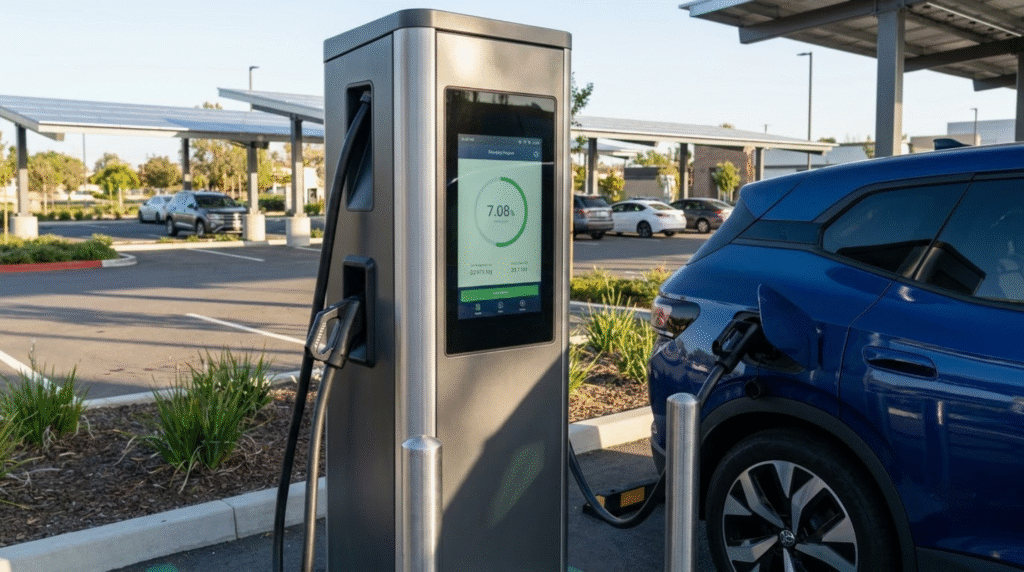
A 33 kW charger will typically take a small EV from empty to 80% in around 45 minutes to 1.5 hours, and a larger EV in 2 to 2.5 hours, depending on battery size and how fast your car’s onboard system can accept power.
The Quick Formula
Charging time isn’t guesswork — it comes down to a simple relationship:
Charging time (hours) ≈ Battery capacity (kWh) ÷ Charger power (kW) × efficiency factor (85–90%)
A 33 kW charger sits solidly in the fast-charging category, well above a standard home socket (2.3 kW) or a basic AC wallbox (7.4 kW), which is why it’s a popular choice for residential societies, offices, and small commercial sites across India.
Estimated Charging Times by Battery Size
| Battery Size | Typical EV Type | Time on 33 kW (0–80%) |
|---|
| 30 kWh | Small hatchback EV | ~45–60 minutes |
| 40 kWh | Compact EV | ~1–1.25 hours |
| 60 kWh | Mid-size sedan/SUV | ~1.5–2 hours |
| 75–80 kWh | Larger SUV/sedan | ~2–2.5 hours |
These figures cover 0–80% charge, which is the range most drivers actually use day to day.
Why It's Not a Straight Line
A few real-world factors change these numbers:
Charging slows near full
Most EVs charge quickly up to about 80%, then the battery management system deliberately tapers the rate to protect the cells. The last 20% can take nearly as long as the first 80% — which is why fast chargers are built around the 0–80% use case, not topping all the way up.
Your car's onboard charger sets the ceiling
A 33 kW charger can only deliver as much power as your EV is built to accept. If it’s an AC unit, your vehicle’s onboard charger has to be rated for that power — many EVs cap AC charging at 7.4, 11, or 22 kW regardless of what the charger can supply. A DC 33 kW charger sends power directly to the battery, bypassing that limit, which is why DC fast chargers are the faster option in practice.
Temperature and battery age
Very hot or cold weather, and older battery packs, can both slow charging slightly compared to the numbers above.
Getting the Right Charger for Your Needs
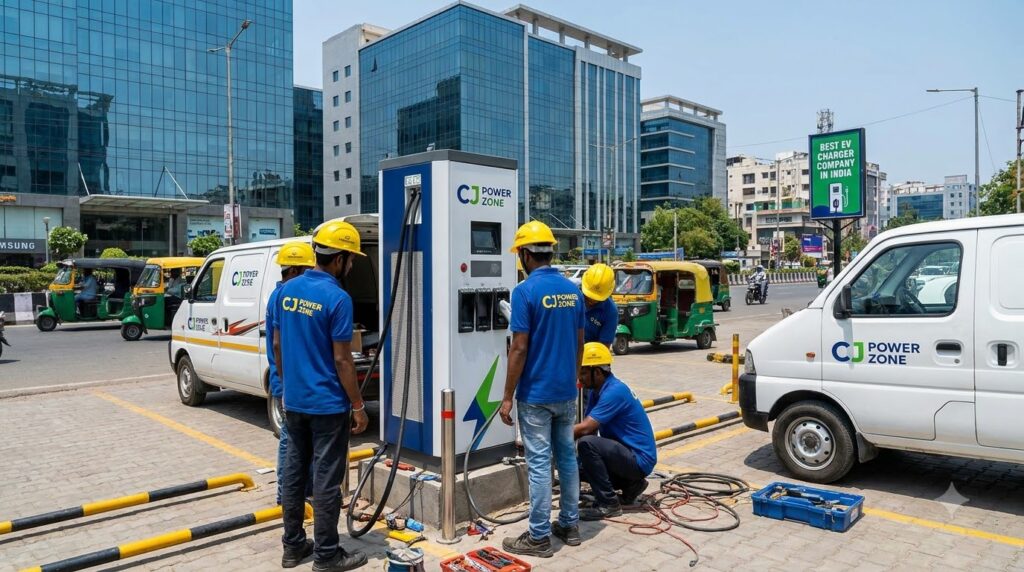
As an Authorized Channel Partner of Adani Total Energies E-Mobility Ltd. and a partner to VinFast, CJ Power Zone designs and installs EV charging infrastructure for homes, businesses, and fleets across India, backed by 24/7 support and a smart CMS platform for real-time monitoring. Whether a 33 kW unit is the right fit — or you need something faster or slower depending on your vehicle mix and site power supply — our team can size the right solution for your location.
Frequently Asked Questions
Get the Right Commercial EV Charger for Your Business
Let CJ Power Zone help you choose, install, and maintain the ideal charging setup for your business needs.
CJ Power Zone Private Limited
Phone: +91-8686414101
Email: chetanjuneja@cjpowerzone.com
Address: Kailash Nagar Road, Luxmi Colony, PO Basti Jodhewal, Ludhiana, Punjab
Second Location:
CJ-PowerZone Pvt. Ltd., Global Business Park, 2nd Floor, adjoining Passport Office, Ludhiana, Punjab 141008.
Get in touch with CJ Power Zone to discuss your EV charging requirements and explore a suitable charging infrastructure solution.you can find on google