EV Charger Buying Guide: What to Check Before You Buy
The right EV charger matches your car’s maximum AC charging speed, your building’s electrical supply, and how you actually drive. Pick on those three points, then compare connector type, safety features and smart controls. A higher kW rating alone does not make a charger better.
Buying a charger is easy to get wrong. Many owners pay for a 22 kW unit their car cannot use, or install a wall box on wiring that was never designed for it. This guide walks you through the decisions in order, so you can compare chargers with confidence
Step 1: Know the Types of EV Chargers
Portable (Emergency) Charger
Most EVs ship with a portable charger that plugs into a standard socket. It is slow and fine for backup, but it is not meant to be your daily solution. Running it for hours on an old socket and thin wiring is a safety risk.
AC Wall Box (Home and Workplace Charger)
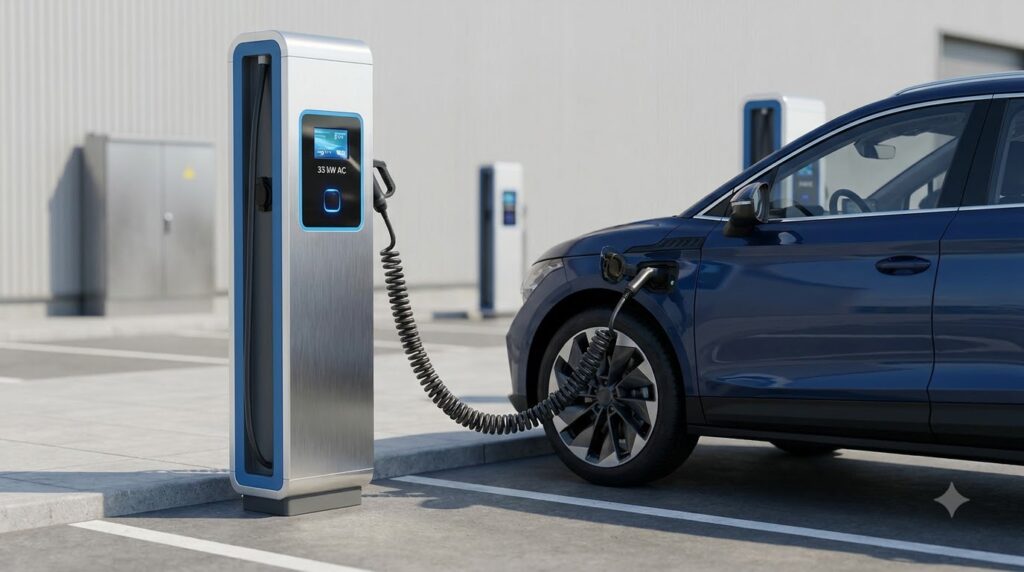
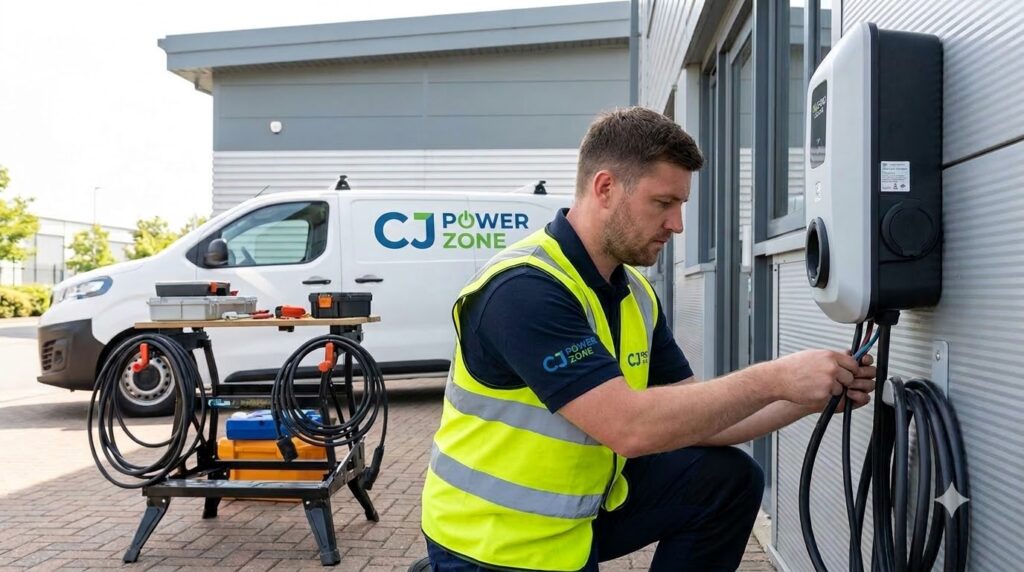
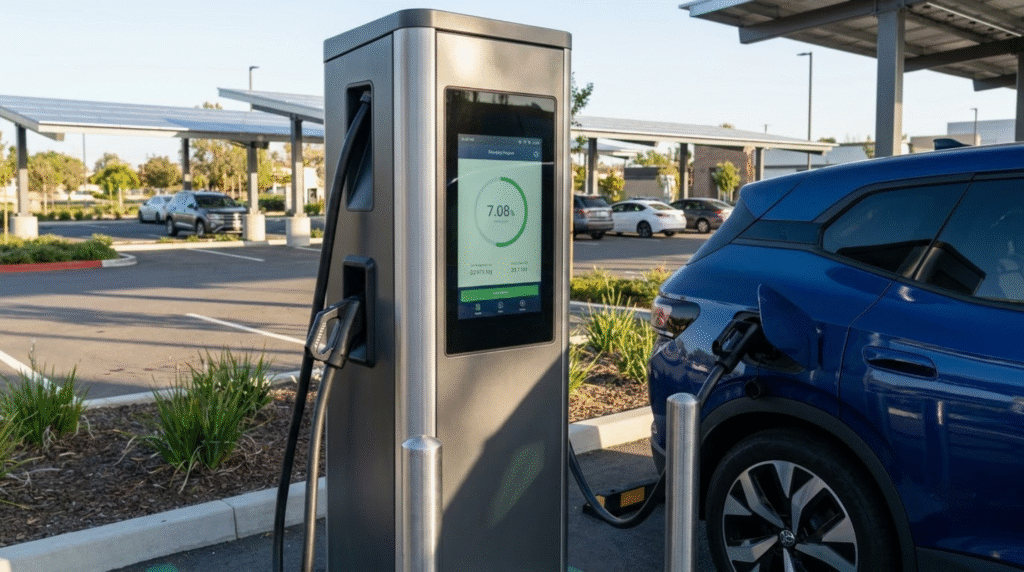
This is the usual home upgrade. An AC wall box is wired to a dedicated circuit and supplies AC power to the car’s onboard charger, which converts it to DC for the battery. Typical home units run at around 3.3 kW to 7.4 kW on single phase and are ideal for overnight charging.
DC Fast Charger
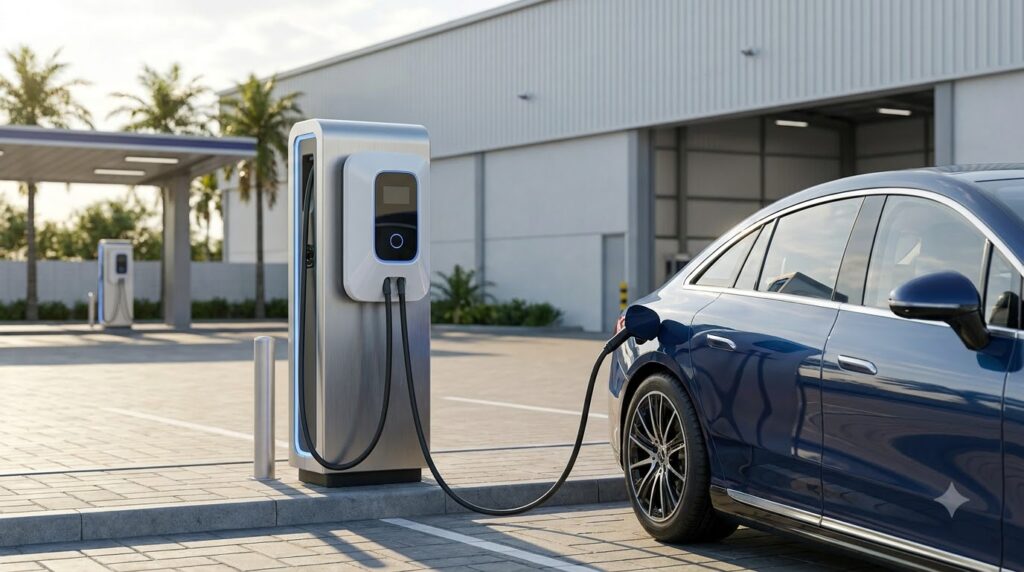
DC fast chargers feed DC power straight to the battery and are common at highway and public stations. They need heavy three-phase infrastructure and are mainly for commercial sites, fleets and destinations.
Quick rule: Homes, apartments and offices usually want AC. Public hubs and high-turnover sites need DC.
Step 2: Match the Charger to Your Car
Check Your Car's Onboard Charger Limit
Your car can only accept AC power up to its onboard charger rating. If your car accepts 7.2 kW AC, a 22 kW charger will still deliver about 7.2 kW. Look up the AC charging rating in your car’s manual or spec sheet before you buy.
Check the Connector
For four-wheelers in India, the common standards are Type 2 for AC and CCS2 for DC. A car with a CCS2 inlet accepts a Type 2 AC plug. Confirm your car’s inlet, and ask whether the charger is tethered (cable attached) or socketed (you bring your own cable).
Estimate Your Charging Time
Charging time is roughly battery size divided by usable charging power, plus some loss. For example, a 30 kWh battery from low to full on a 7.4 kW charger takes around 4 to 5 hours in practice. A slower 3.3 kW unit takes roughly twice as long. [Insert Industry Statistic 2026: average daily distance driven by Indian EV owners]
Step 3: Check Your Electrical Supply
This is the step buyers skip, and it matters most.
- Supply type: Most homes are single phase. Three-phase supply allows higher AC power.
- Sanctioned load: Your connected load must cover the charger on top of everything else running at home.
- Dedicated circuit: The charger should have its own circuit with proper cable sizing.
- Earthing: Good earthing is essential. Poor earthing is one of the most common causes of charging faults and safety issues.
- Protection: Ask for an appropriate MCB and RCCB or equivalent protection, as specified by the installer.
- Distance: A long run from the meter or distribution board raises cable cost and voltage drop.
Have a qualified electrician inspect your setup before you buy. The right charger on the wrong wiring is still the wrong setup.
Step 4: Compare Features That Actually Matter
Safety and Build Quality
- Over-voltage, under-voltage, over-current and short-circuit protection
- Leakage (earth fault) protection
- Over-temperature protection
- IP rating suited to where you install it (look for strong dust and water protection if it sits outdoors or in a parking bay)
- Fire-retardant enclosure and quality cable
Smart Features
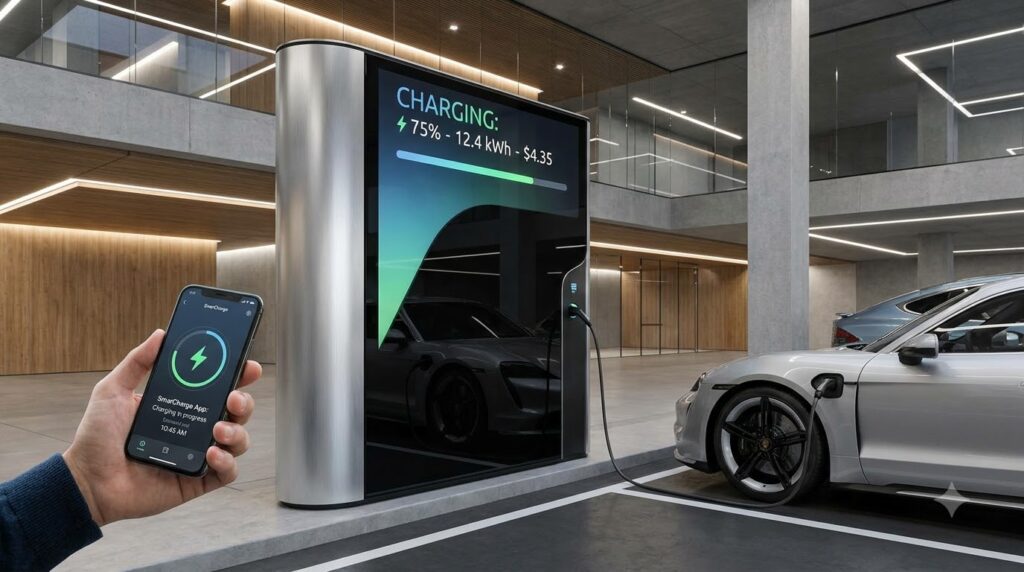
- App control, scheduling and usage tracking
- RFID or app authentication for shared bays and workplaces
- OCPP support if you plan to connect to a charge management platform (important for businesses)
- Dynamic load balancing if you will install several chargers on one supply
- Over-the-air firmware updates
If you charge only at home, scheduling for off-peak tariffs may be enough. Offices, housing societies and commercial parking benefit from OCPP and access control.
Cable and Installation Details
- Cable length that reaches your car’s port from where it parks
- Wall or pedestal mounting
- Clear installation requirements and a proper commissioning test
Step 5: Think About Where You Live
Independent House
You have the most flexibility. A dedicated wall box near your parking spot is usually simple.
Apartment or Housing Society
You will likely need permission from the society and a plan for metering your charging power. Raise it with the managing committee early, ask for a shared or dedicated parking-bay solution, and check whether you want a separate meter or a sub-metered charger.
Office, Shop or Fleet
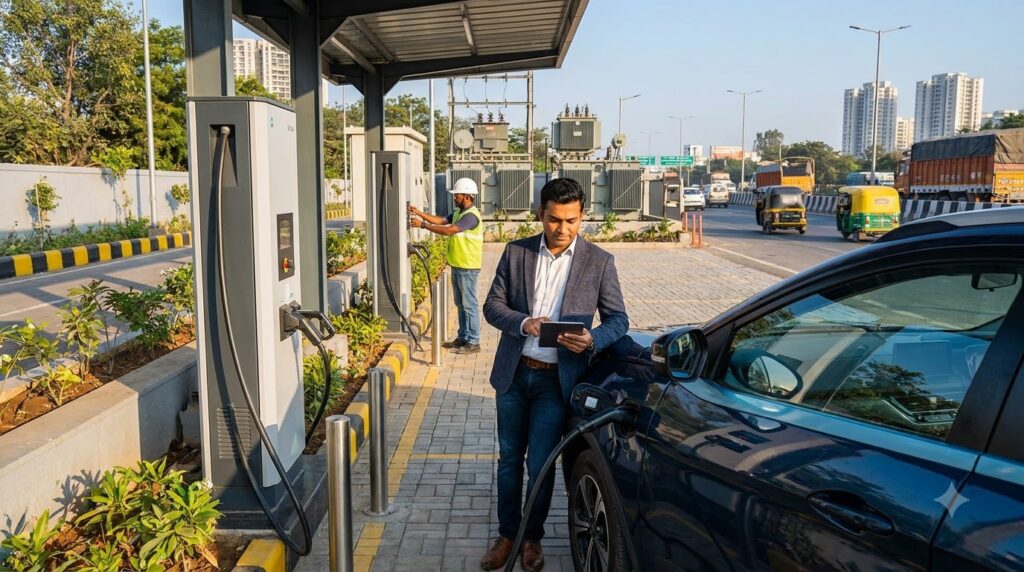
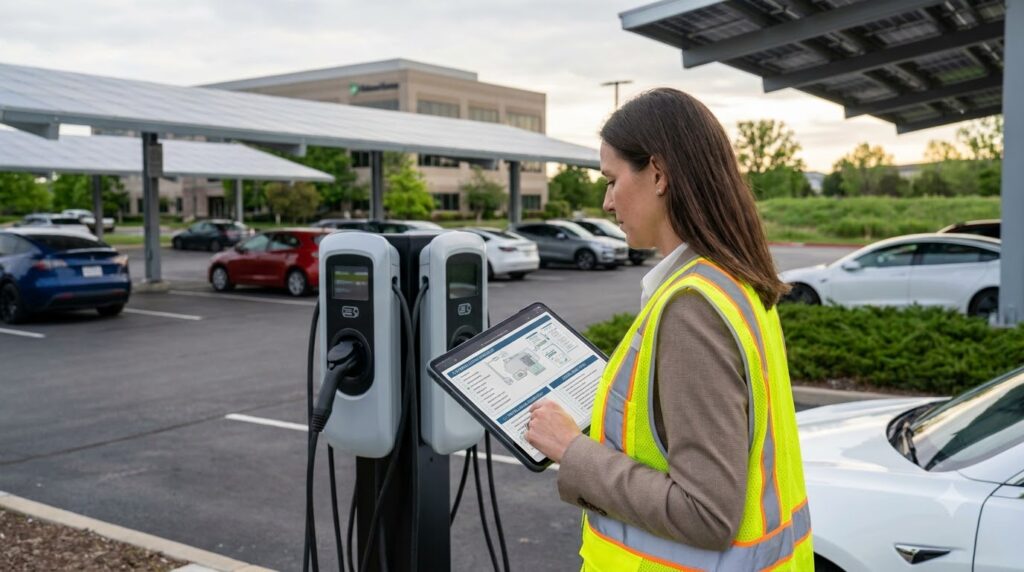
Choose chargers with access control, billing or reporting support, and OCPP. Plan for future expansion so you do not rewire later.
Step 6: Budget, Warranty and After-Sales Support
Compare the total cost, not just the price tag: charger, cable, circuit work, protection devices, installation and any society or utility paperwork.
Also check:
- Warranty length and what it covers
- Whether the supplier does installation and commissioning
- Availability of spare parts and service in your city
- Who to call if the charger faults after hours
Pricing and subsidies vary by state and change over time, so confirm the current position with your supplier and your state or utility before you buy.
EV Charger Buying Checklist
- What is my car’s maximum AC charging rate?
- Which connector does my car use?
- Do I have a dedicated parking spot and a reachable power source?
- Is my supply single phase or three phase?
- Is my wiring and earthing suitable for a dedicated charger?
- Do I need smart features, OCPP or access control?
- Is the charger rated for where I install it?
- Who installs it, and what is covered in warranty and service?
Official Reference Point
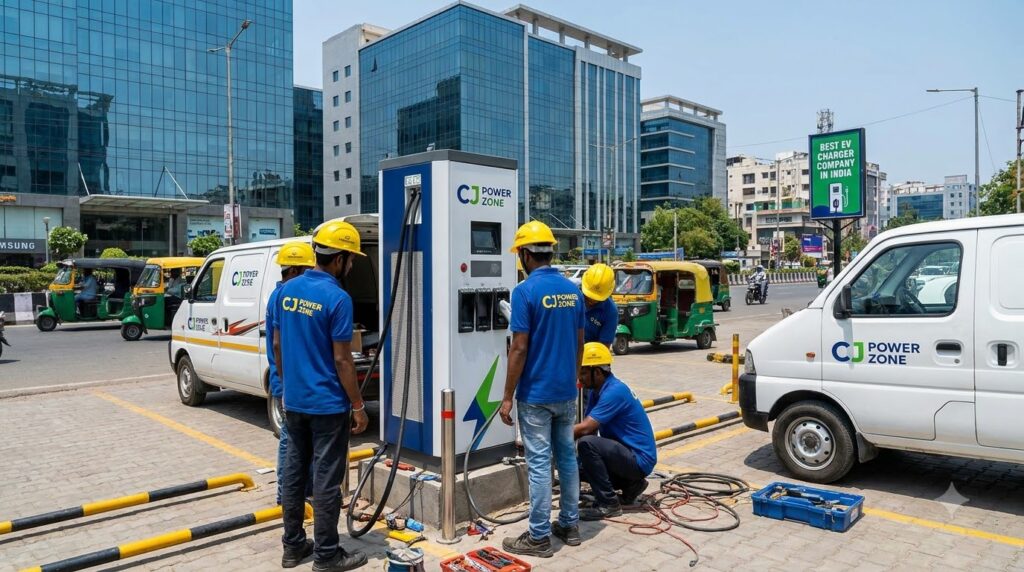
CJ Power Zone Private Limited
Phone: +91-8686414101
Email: chetanjuneja@cjpowerzone.com
Address: Kailash Nagar Road, Luxmi Colony, PO Basti Jodhewal, Ludhiana, Punjab
Second Location:
CJ-PowerZone Pvt. Ltd., Global Business Park, 2nd Floor, adjoining Passport Office, Ludhiana, Punjab 141008.
Get in touch with CJ Power Zone to discuss your office EV charging needs
Frequently Asked Questions