

Have questions about EV charging installation, products, or services? Our team at CJ Power Zone is here to help you find the right solution.
+91-8686414101
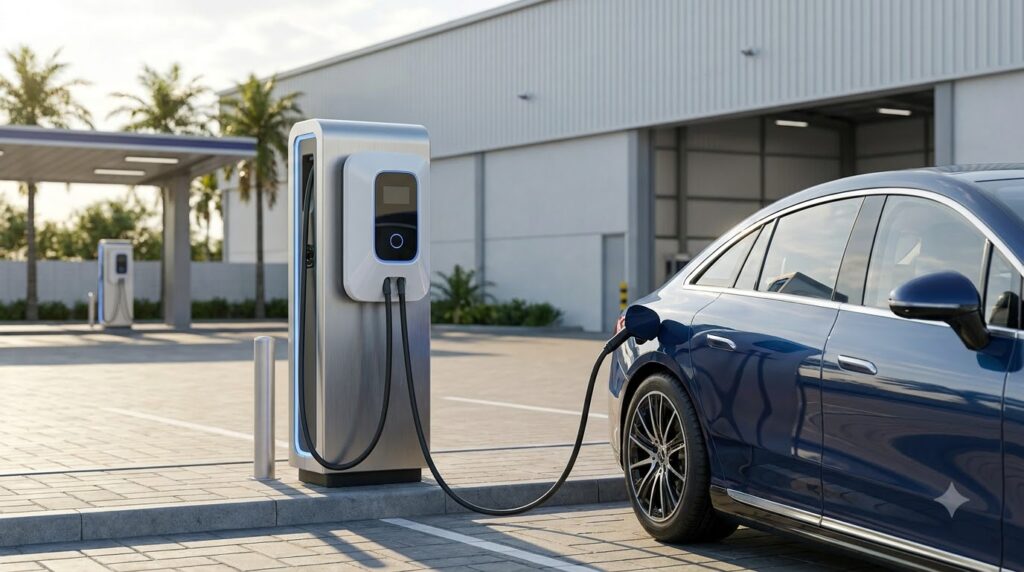
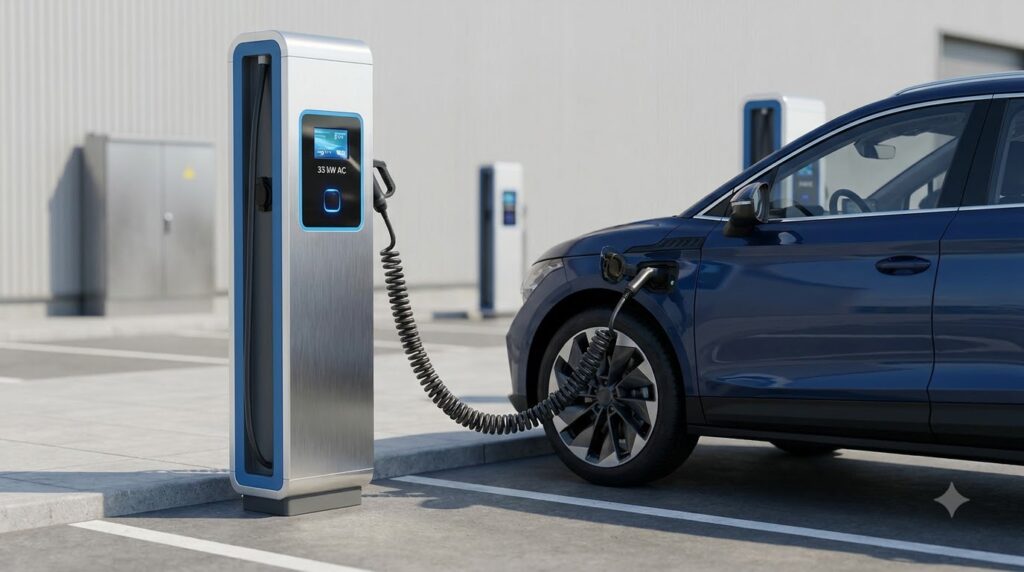
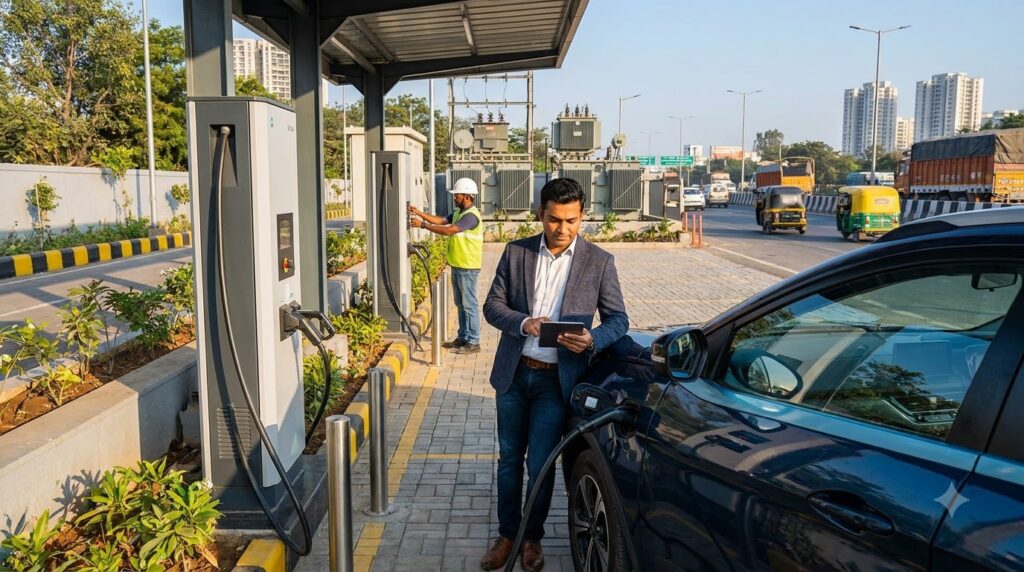
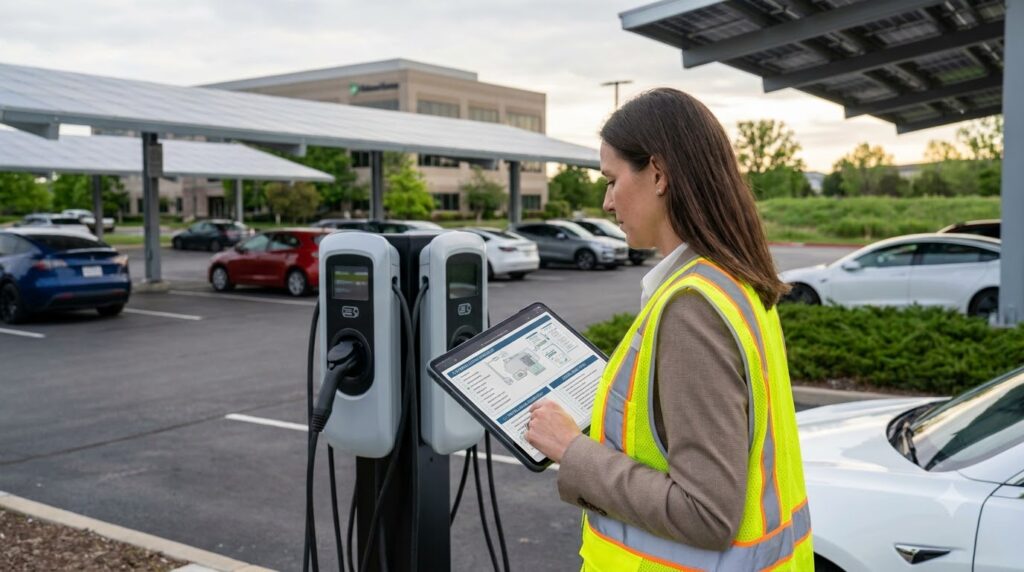
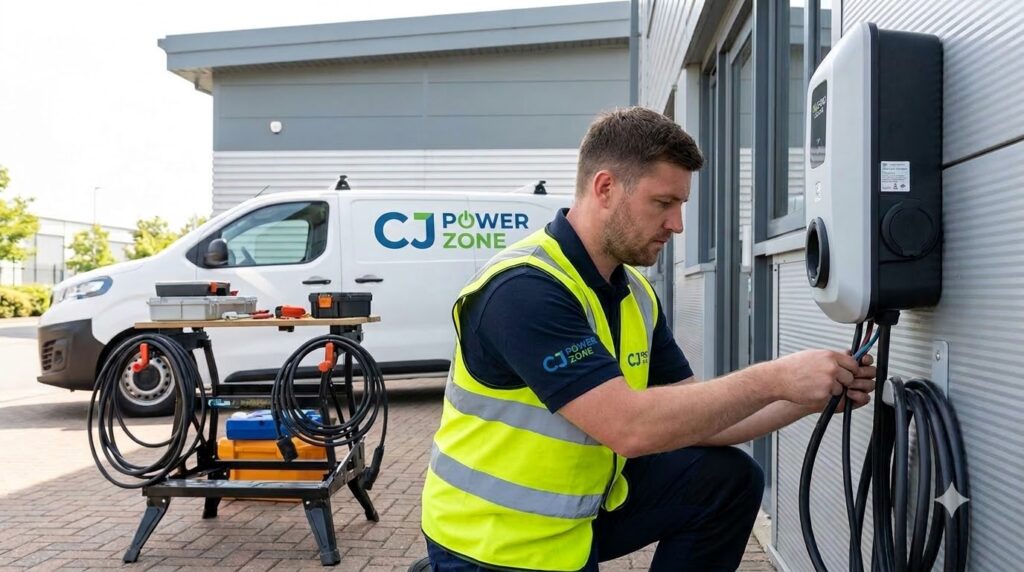
A 3-pin EV charger is safe only when three things are true: you use a proper 15A socket, the wiring and earthing are sound, and the charger itself is certified. If any one of these fails, the risk of overheating, tripping or even fire goes up. For daily charging, a dedicated home charger is the safer and smarter choice.
Most electric cars and scooters sold in India ship with a portable charger that plugs into an ordinary wall socket. It is handy. It is also the most misused piece of EV equipment in the country. This guide explains how it works, where it goes wrong, and how to charge safely, whether you live in Ludhiana, Chandigarh, Jalandhar or anywhere else in Punjab.
A 3-pin EV charger is the portable cable that comes with many EVs. One end plugs into a 15A wall socket. The other end plugs into the car. In the middle sits a small control box that talks to the vehicle and cuts power if it detects a fault. This setup is often called a “Mode 2” charger.
It typically delivers around 2.5 to 3.3 kW, which is the same kind of load an air conditioner draws. That is a heavy, steady load, and it runs for hours. A hair dryer runs for ten minutes. An EV charger runs all night.
So, How Safe Is It?
The charger is designed with safety in mind. The control box monitors the connection and cuts power if something is wrong. The weak link is usually the socket and wiring behind the wall, not the charger.
Here is the honest picture:
1. Overheating plugs and sockets
EV charging pulls high current for many hours. Over time, plugging and unplugging loosens the pins inside a socket. A loose pin creates resistance, and resistance creates heat. One engineer who wrote about this topic reported burning his hand on a 15A plug after long EV use. Melted pins and scorched sockets are common signs of trouble.
2. Poor or missing earthing
Earthing gives fault current a safe path to the ground. Without it, a fault can make the charger casing or the car body live. Many EV chargers detect a bad earth and refuse to start, which is a safety feature, not a defect. Do not bypass it.
3. Old or thin wiring
Many older homes have wiring built for lights and fans, not for a 3 kW load running all night. Thin wires heat up under sustained load, and the heat often builds up inside the wall where you cannot see it.
4. Extension boards and multi-plugs
These are the most dangerous shortcut. Extension boards and thin leads are not built for hours at that load, and manufacturers of portable chargers warn against using them. Never use one for EV charging.
5. Moisture and weather
Water and electricity do not mix. Outdoor sockets exposed to rain, dust or humidity can fail through water getting in. Charging in the open without a weather-rated point is a gamble.
6. Lack of surge and fault protection
A basic household socket has no surge protection and no thermal monitoring. Voltage spikes on the grid can reach your car. A dedicated charger setup usually adds an RCBO and surge protection to guard against this.
7 Safety Rules for Using a 3-Pin EV Charger
| Feature | 3-pin portable charger | Dedicated home EV charger |
|---|---|---|
| Typical power | About 2.5-3.3 kW | Higher, depends on model and supply |
| Charging speed | Slow | Faster |
| Safety design | Depends on the home socket | Purpose-built circuit, protection devices |
| Wear and tear | Socket loosens with use | Built for repeated connection |
| Best for | Backup, travel, emergencies | Daily home or office charging |
| Installation | None | Needs a qualified installer |
The simple rule: treat the 3-pin charger as your backup plan, not your main plan. If you drive an EV every day, a dedicated charger is a better investment.
Choose a dedicated EV charger if:
A dedicated unit uses its own circuit, correct cable size, proper earthing and protection devices. That removes most of the risks listed above.
CJ Power Zone Private Limited is a Ludhiana-based EV charging company and an authorised channel partner of Adani TotalEnergies E-Mobility Ltd. The team supports homes, businesses, fleets and public charging projects with end-to-end solutions, including installation and support.
For electrical and charging standards in India, Central Electricity Authority guidelines on EV charging infrastructure.
It is not recommended as a daily habit. Sustained high current can wear out the socket and heat the wiring. Daily charging is safer on a dedicated EV charger
No. Extension cords and multi-plugs are not built for hours of heavy load and can overheat. Plug the charger directly into a proper 15A wall socket.
The most common cause is poor earthing or a weak socket. Many chargers refuse to start when they detect a problem. Have an electrician test the socket and earthing.
Avoid charging in the open without protection. Use a weather-protected socket, and never let the plug or socket sit in water. When in doubt, charge under cover.
It removes the biggest risks. A dedicated unit uses a proper circuit, the right cable size, earthing and protection devices, so the wall socket is no longer the weak link.
Talk to our team about the right home or business EV charger for your needs. Get A Free Consultation With CJ Power Zone
Copyright © 2026 CJ Power Zone Private Limited | All rights reserved. | Design By Complete AD
No WhatsApp Number Found!
WhatsApp us
