

Have questions about EV charging installation, products, or services? Our team at CJ Power Zone is here to help you find the right solution.
+91-8686414101
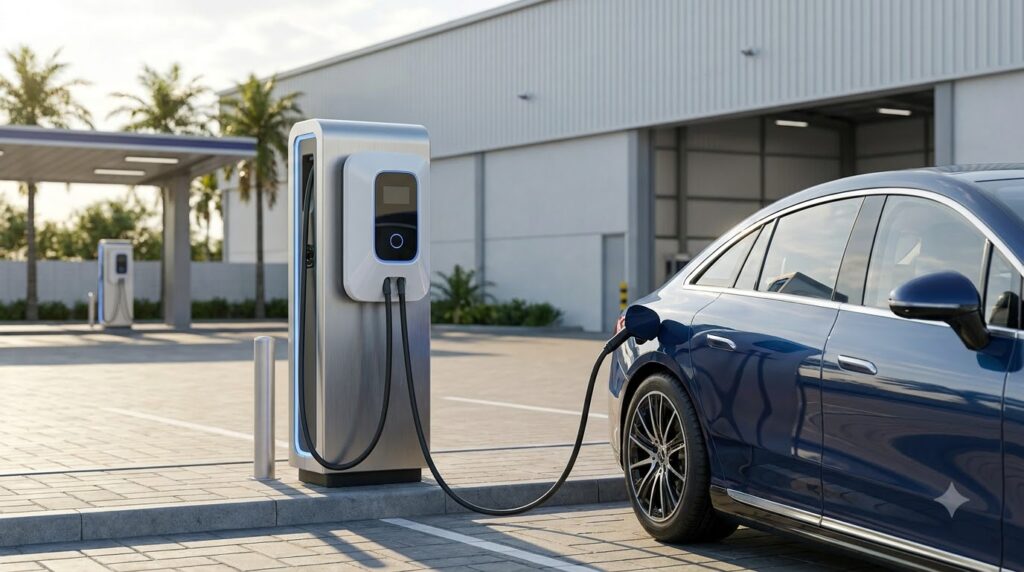
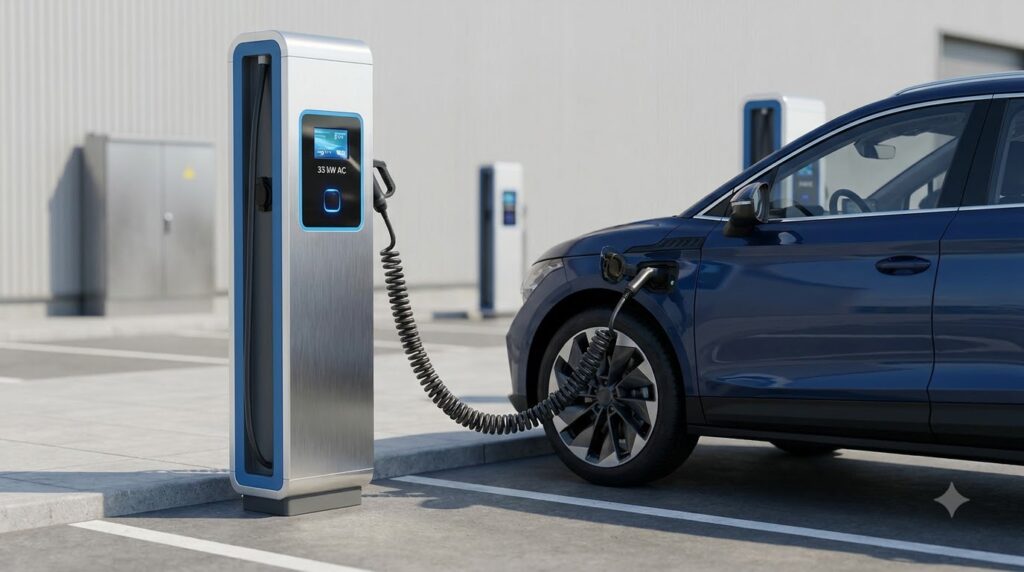
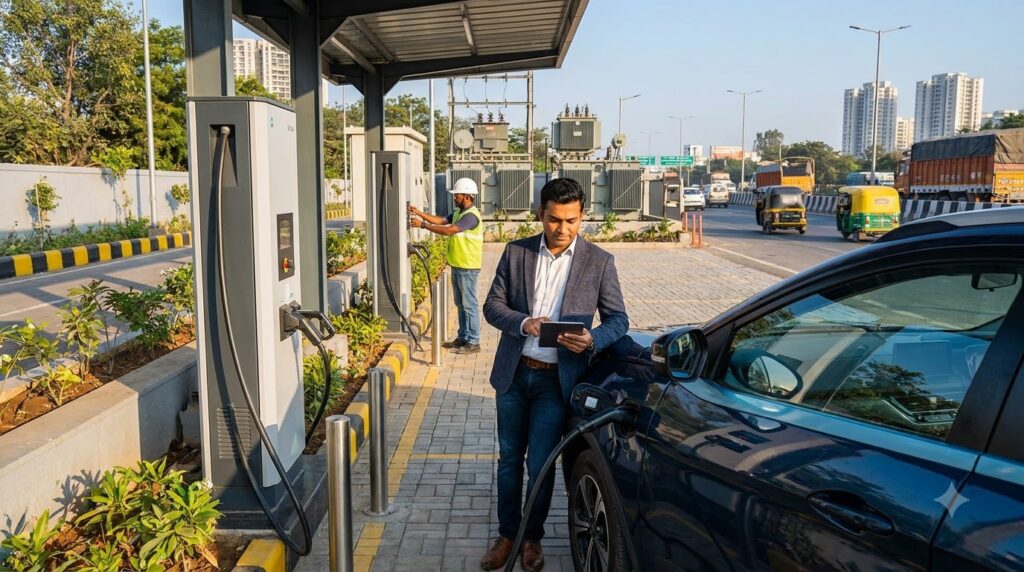
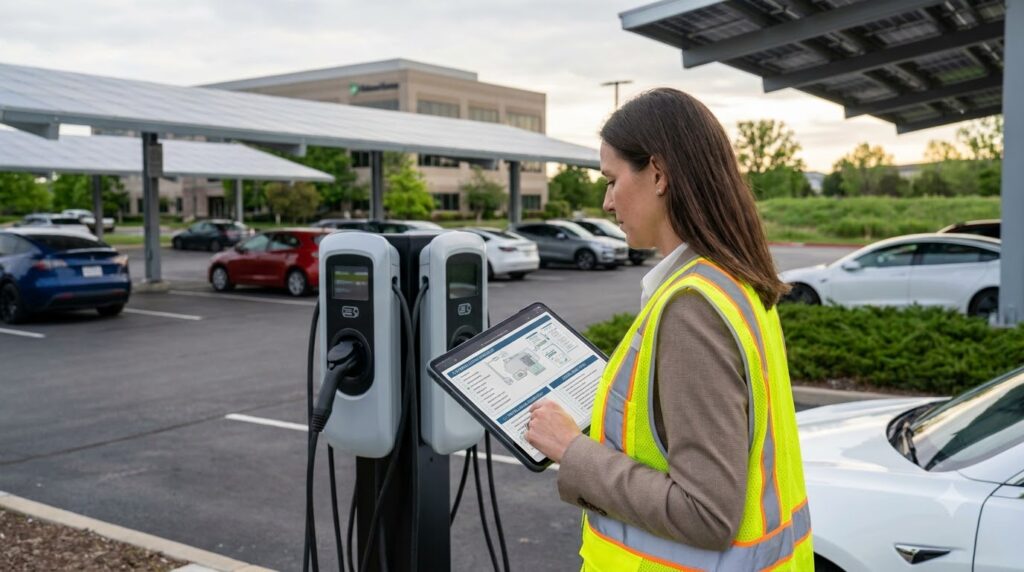
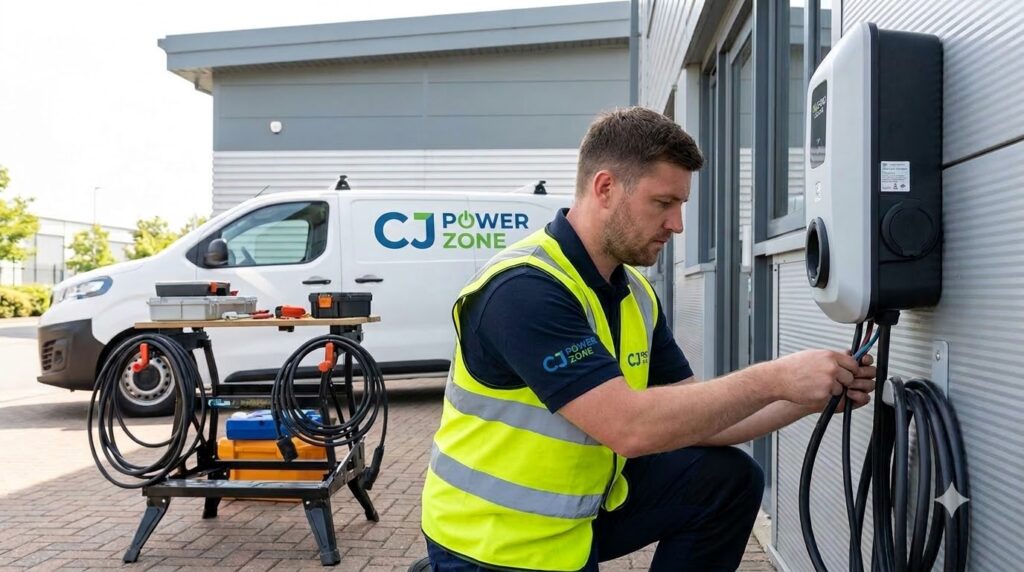
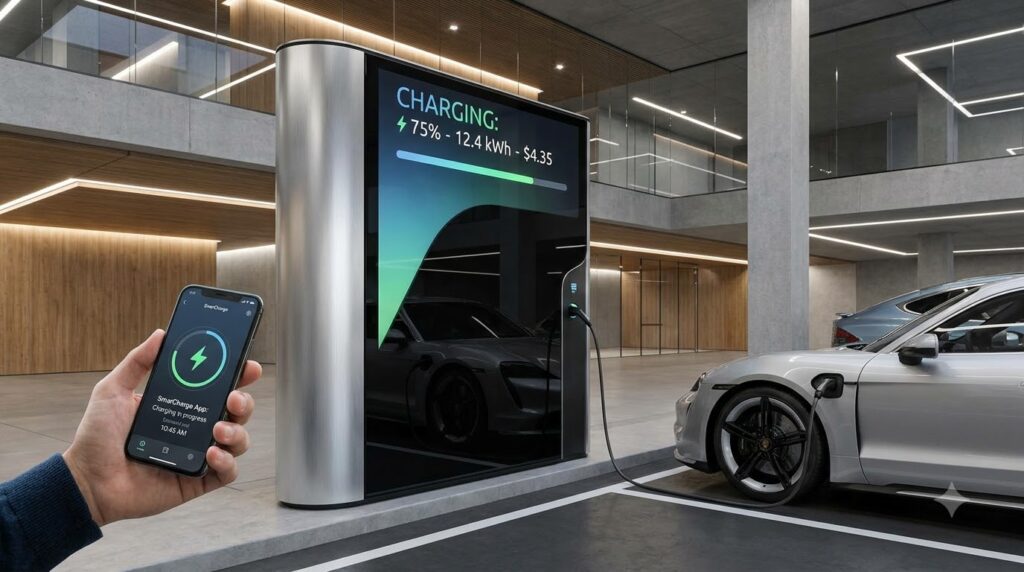
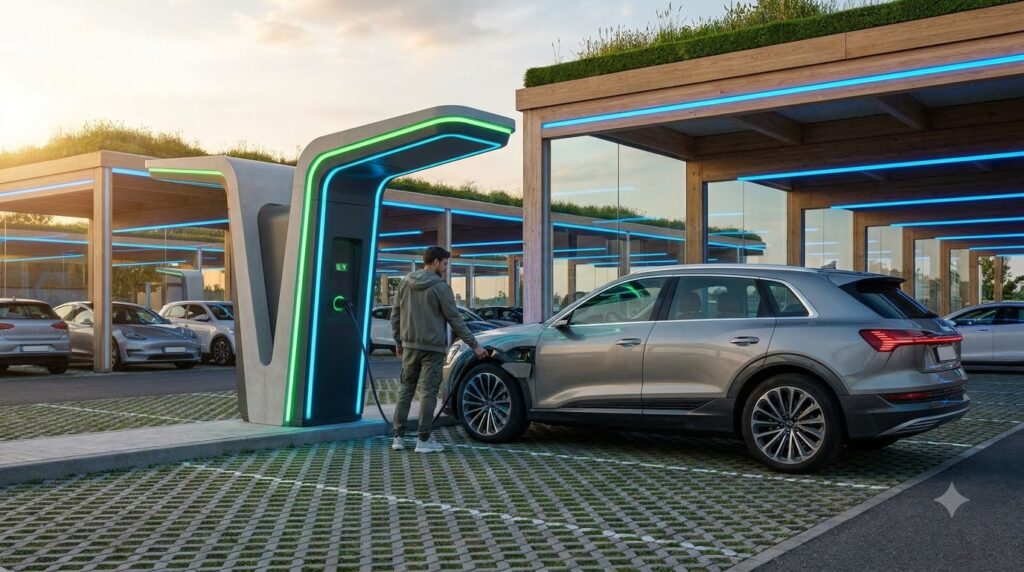
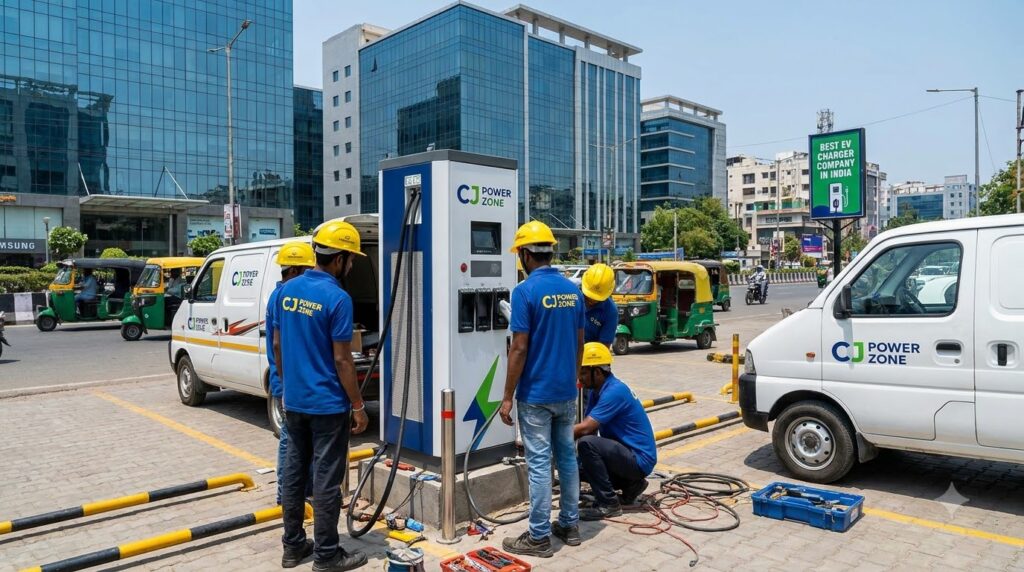
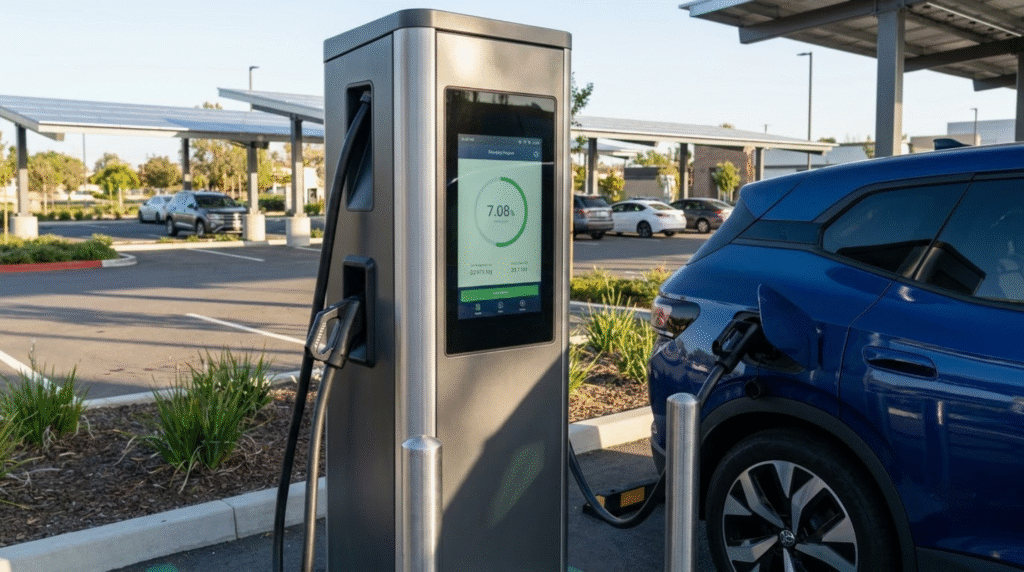
Workplace EV charging means giving employees and visitors a safe, reliable place to charge their electric vehicles while they are at work. With more people buying electric cars and two-wheelers every year, an office car park that offers charging is fast becoming an expectation rather than a bonus.
This guide explains why workplace EV charging makes business sense, which chargers suit an office or campus, how to plan power and policies, and how to roll the project out in sensible phases without disrupting your operations.
Most employees park at the office for eight or nine hours. That is exactly the time an electric car needs to recover a full day’s driving, which makes the workplace one of the most natural places to charge. Staff who cannot charge at home, such as those living in apartments without dedicated parking, benefit the most.
For employers, workplace EV charging is a visible, practical way to support staff and show that the company cares about sustainability. It also prepares your parking area for the growth in electric vehicles, so you are not scrambling to add chargers later when demand has already outgrown your supply.
Every workplace is different, but a few charger types cover most needs.
For staff parking, standard AC chargers are usually enough. Cars stay for a full shift, so a moderate charging speed delivers a good top-up while keeping equipment and electrical costs manageable. This is the backbone of most workplace EV charging projects.
If several employees rotate through the same bays, for example on shift patterns or in visitor areas, higher-power AC units shorten the time each car needs, so more vehicles can use the same spot in a day.
Companies with delivery vehicles, taxis or executive cars that must return to service quickly may add a DC fast charger. It needs more power and planning, so it is best used selectively alongside AC units.
Choose smart chargers that support access control, usage reporting and remote monitoring. Common connector types such as Type 2 for AC and CCS2 for DC should be supported so most employee vehicles can plug in without adapters.
Before buying anything, review your building’s electrical capacity. A site assessment looks at your sanctioned load, transformer, panels, cable routes and earthing to see how many chargers you can support safely.
Load management is the key technology here. It shares available power across all active chargers, so adding several bays does not push the building beyond its limit. It can also reduce charging during peak office demand and increase it when the load is lighter.
For layout, place bays near the electrical room to control cable costs, protect them from sun and rain where possible, and mark them clearly for EV use. Lay conduit and cable capacity for future chargers now, as it is far cheaper than digging up a finished car park later.
A workplace EV charging programme works best when the rules are simple and fair. Decide early how employees will access and pay for charging.
Add practical rules as well, such as time limits during busy hours or a request to move the car once charging is complete, so bays are available to everyone.
Electrical safety is not optional. Chargers need proper earthing, protection devices, weatherproofing and certified installation. Check the applicable guidelines and local utility requirements before installation, and make sure your installer follows them.
Once running, chargers need regular inspection, firmware updates and quick fault response. A workplace where chargers are frequently out of order loses employee trust quickly, so choose a partner who provides dependable after-sales support.
A phased approach keeps cost and disruption under control.
To see our range and services, visit CJ Power Zone, or browse more articles on our blog.
Let CJ Power Zone help you plan, install, and support a reliable charging setup for your employees and visitors.
CJ Power Zone Private Limited
Phone: +91-8686414101
Email: chetanjuneja@cjpowerzone.com
Address: Kailash Nagar Road, Luxmi Colony, PO Basti Jodhewal, Ludhiana, Punjab
Second Location:
CJ-PowerZone Pvt. Ltd., Global Business Park, 2nd Floor, adjoining Passport Office, Ludhiana, Punjab 141008.
Get in touch with CJ Power Zone to discuss your office EV charging needs and explore a charging infrastructure solution that fits your workplace. You can also find us on Google.
Workplace EV charging turns your car park into a benefit that employees notice every day and a signal that your company is ready for the future. Start small, plan power carefully, keep policies simple and choose equipment and a partner you can rely on. For national guidance on charging infrastructure, you can also refer to the Ministry of Power.
It helps attract and retain employees who drive electric vehicles, supports sustainability goals and makes daily EV ownership easier because cars charge while staff are at work.
AC chargers are usually the best fit because vehicles stay parked for a full working day, giving enough time to charge at a moderate speed with lower installation and running costs.
Both models are common. Some companies offer charging as a free benefit, others charge employees per unit through an app or RFID card, and some cover a set allowance. Smart chargers can track usage for any of these.
For a small number of AC chargers it is often possible, particularly with load management that shares available power. A site assessment confirms what your building can support.
Start with the number of EV-driving employees you have now plus expected near-term demand, and prepare cabling and conduit so more chargers can be added later without major rework.
Copyright © 2026 CJ Power Zone Private Limited | All rights reserved. | Design By Complete AD
No WhatsApp Number Found!
WhatsApp us
