

EV Charger for Office Parking: Guide for Indian Businesses
have any question?
Have questions about EV charging installation, products, or services? Our team at CJ Power Zone is here to help you find the right solution.
Call us now!
+91-8686414101
recent post
-
 24 Aug 2026Best 33 kW EV Charger | Commercial EV Charging | CJ Power Zone
-
 24 Aug 202633 kW EV Charger | Fast Commercial EV Charging | CJ Power Zone
-
 19 Aug 2026How to Start an EV Charging Station Business in India
-
 11 Aug 2026Can You Install an EV Charger Without Government Approval?
-
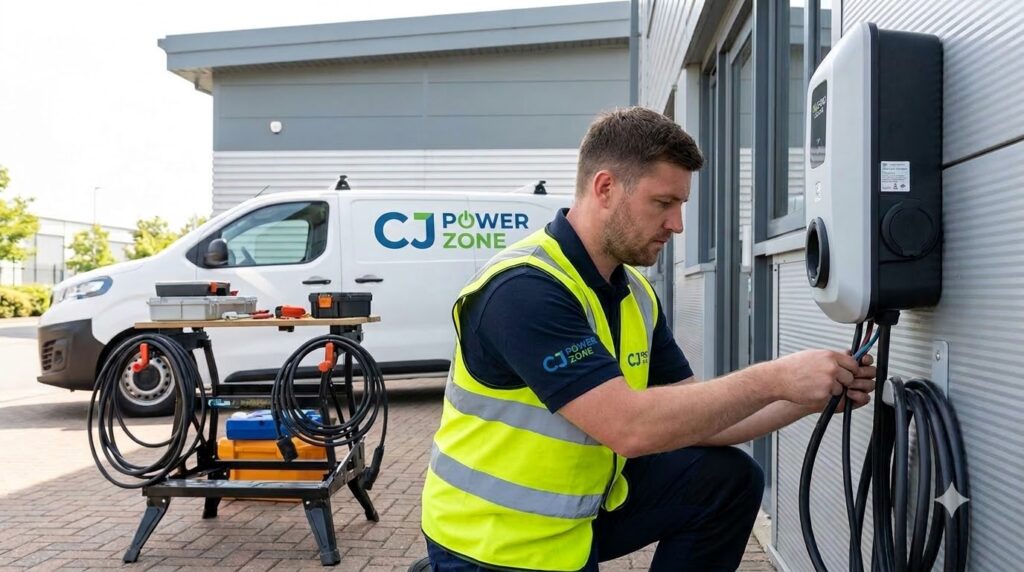 11 Aug 2026Why Partner with an Authorized EV Charging Provider Like CJ Power Zone?
-
 11 Aug 2026Which Factors Affect the Speed of EV Charging?
-
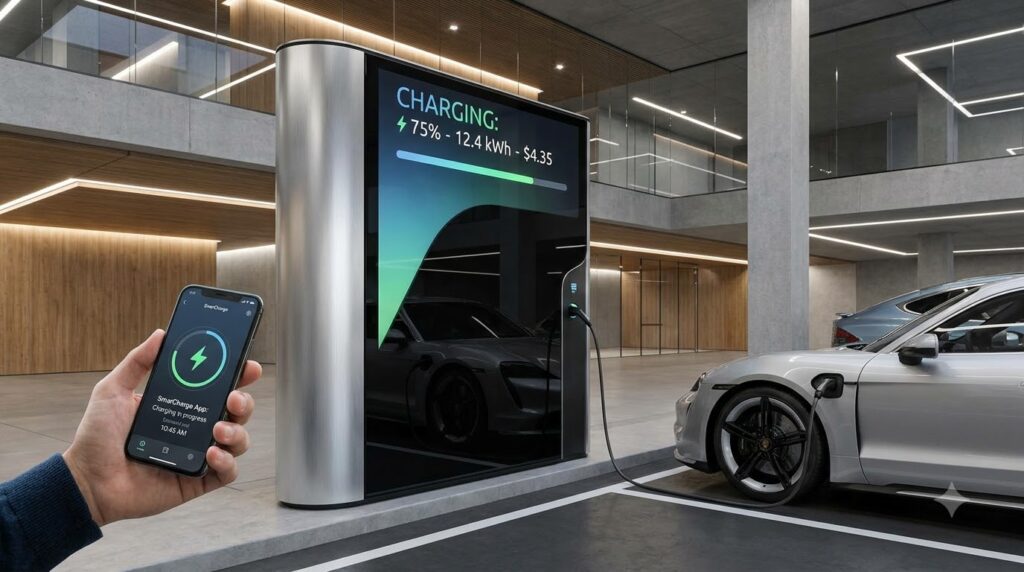 11 Aug 2026What Are the Benefits of Smart EV Charging Stations?
-
 11 Aug 2026How Do You Choose the Right EV Charger for Your Vehicle?
-
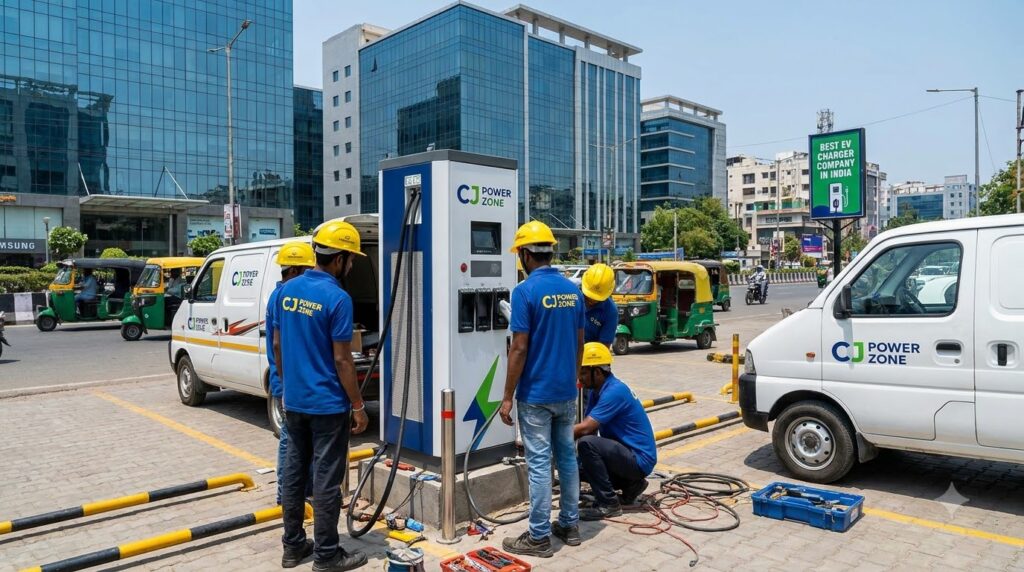 05 Aug 2026CJ Power Zone: Powering the Future of EV Charging in India
-
 05 Aug 2026CJ Power Zone: The Best EV Charger Company in Haryana
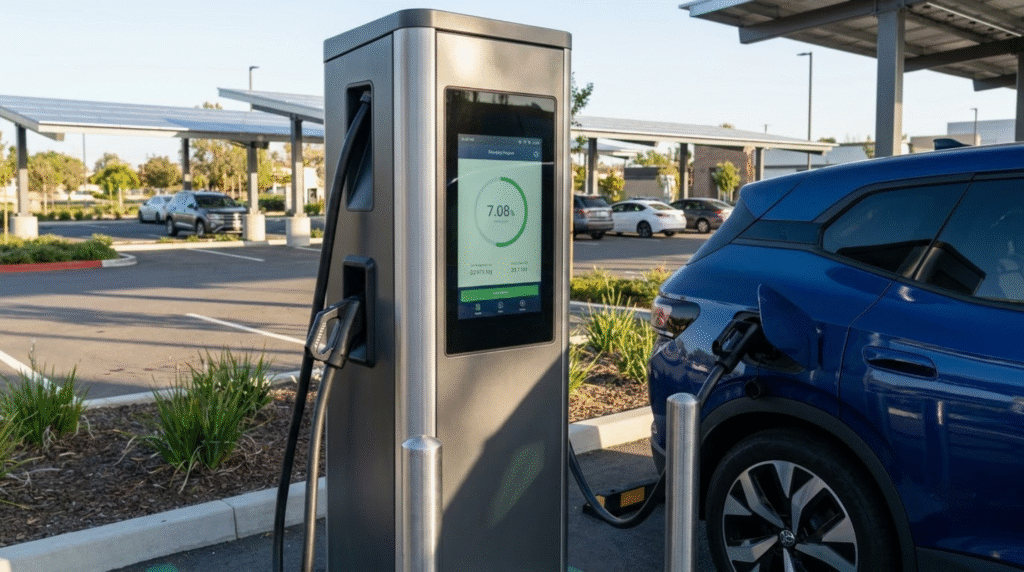
EV Charger for Office Parking: A Complete Guide for Indian Businesses
An EV charger for office parking lets employees, visitors and company vehicles charge while they work. For most offices, AC chargers (typically 7.4 kW to 22 kW) are the right fit, because cars sit parked for six to nine hours. Add smart software for access control, billing and load management, and your parking lot becomes a useful amenity instead of a headache.
Electric cars are no longer rare in business parks and corporate campuses. If you manage an office in Ludhiana, Chandigarh, Jalandhar, Amritsar or elsewhere in North India, your staff will ask for charging sooner than you think. This guide shows how to plan it properly.
Why Offices Need EV Charging Now
Home charging is not available to everyone. A McKinsey survey, as cited in a Bolt.Earth article, found that 55% of EV owners in India have access to home charging, while the other 45% depend on public, shared or workplace options. Many of them live in flats without a private parking spot.
For those drivers, the office car park is the most practical place to charge. Here is what you gain:
- Employee benefit: a charging point is a perk that staff notice and value.
- Visitor appeal: clients and partners with EVs can charge during meetings.
- Fleet readiness: company cars, pool vehicles and delivery EVs can charge on site.
- Sustainability goals: workplace charging supports ESG and green-building targets.
- Parking value: EV bays can help you attract tenants and justify premium parking.
AC or DC: Which Charger Suits Office Parking?
Cars stay in an office lot for hours, so slow-to-medium AC charging is almost always enough. DC fast charging costs more and needs heavy power, and it makes sense only for fleets or public-facing sites.
| Charger type | Typical power | Best for |
|---|---|---|
| Portable / 3-pin | About 3.3 kW | Emergency backup only |
| AC wall or pole-mounted | 3.3 kW to 22 kW (7.4 kW is common) | Employees, visitors, daily office parking |
| DC fast charger | 30 kW and above | Fleets, public stations, highway-style sites |
Our advice: for a standard office, choose Type 2 AC chargers with smart features. A 7.4 kW unit adds a useful range over a working day, and 22 kW units suit vehicles that can accept higher AC power. Check your own fleet’s onboard charger limits before you decide.
What to Plan Before You Install
Good workplace charging starts with a site survey, not a purchase order. Check these six points.
1. Electrical load and sanctioned load
Each charger adds a heavy, continuous load. Your building’s incoming supply, transformer and main panel must handle it. Many offices need a load assessment, and some need a higher sanctioned load.
2. Number and location of bays
Start with the number of EVs today, then add room to grow. Place chargers close to the electrical panel to keep cable runs short, and keep bays easy to reach and well lit.
3. Cabling, earthing and protection
Use the correct cable size, proper earthing, an RCBO and surge protection. Cutting corners here is the main cause of charger faults and safety problems.
4. Load management
If many cars plug in at once, they can overload the building. Load-managed smart charging shares available power across all chargers, so you avoid tripping the main supply and avoid costly upgrades.
5. Access and billing
Decide who can use the chargers and how they pay. Options include free use for staff, RFID or app-based access, and per-unit or per-session billing.
6. Weather and safety
Outdoor bays need weather-rated equipment, clear signage, good lighting and safe cable management.
Smart Features That Matter for Offices
Not all chargers are equal. Look for:
- OCPP compliance: Open Charge Point Protocol lets chargers talk to a central management system, and lets you switch software later without replacing hardware.
- Remote monitoring (CMS): see charger status, faults and usage from one dashboard.
- User authentication: RFID, app or QR access keeps strangers from using your power.
- Billing and reporting: track energy used per user, per department or per vehicle.
- Connectivity: Wi-Fi, LAN or 4G so the charger stays online.
Who Pays for Charging? Three Common Models
- Free for employees. Simple, and a strong staff benefit. You carry the electricity cost.
- Paid by the user. Employees pay per unit through an app or RFID. Costs stay neutral for you.
- Paid with a revenue share. You host the chargers and a charging operator manages billing and maintenance. Ask your provider whether this model is available.
Pick the model that fits your policy, then set it up in your charger management software from day one.
Common Mistakes to Avoid
- Buying cheap chargers without certification or support
- Skipping the load assessment and tripping the main supply later
- Using plug-in socket chargers as a permanent solution
- Choosing chargers that are not OCPP-ready, which locks you in
- Ignoring maintenance, so faults sit unresolved for weeks
- Installing too few bays and having to dig up the lot again next year
How CJ Power Zone Supports Office Charging
CJ Power Zone Private Limited is a Ludhiana-based EV charging company and an authorised channel partner of Adani TotalEnergies E-Mobility Ltd. The team offers end-to-end support for homes, businesses, fleets and public charging projects, backed by a CMS platform for real-time monitoring and remote management and 24/7 customer support.
- Explore chargers on the EV Charging Products page.
- See how installation and support work on the EV Charging Services page.
- View real installations on the EV Charging Projects page.
- Meet the team on the About CJ Power Zone page.
For national standards and guidance, Ministry of Power guidelines for EV charging infrastructure.
Questions to Ask Your Charger Provider
- Will you do a site survey and load assessment before quoting?
- Are the chargers OCPP-compliant and certified?
- Can the system manage load across all chargers?
- How does billing and user access work?
- What does the warranty cover, and who handles repairs?
- Is there a maintenance plan and a support number?
- Can I add more chargers later without redoing the setup?
Frequently Asked Questions
1.Which EV charger is best for office parking?
A Type 2 AC charger, often 7.4 kW, is the best fit for most offices. Cars stay parked for many hours, so fast DC charging is rarely needed. Choose a model with OCPP and remote monitoring.
2. How many EV chargers does an office need?
Start with the number of EVs your staff and visitors use today, and add room to grow. A site survey will confirm what your power supply can support. Load management helps you serve more cars on the same supply.
3.Can employees pay for charging at the office?
Yes. With RFID or app-based access and a management platform, you can bill by unit or session. You can also offer free charging as a staff benefit.
4. Do I need a higher electricity load to install EV chargers?
Sometimes. Each charger adds a continuous load, so a load assessment is needed first. Load management can reduce the need for an upgrade.
5. What is OCPP and why does it matter?
OCPP is a common language between chargers and management software. An OCPP-compliant charger works with many platforms, so you avoid being locked into one vendor.
Ready to Add EV Charging to Your Office?
Tell us about your parking space and the number of vehicles, and our team will suggest the right setup.Get A Free Consultation With CJ Power Zone
